Friday Jun 19, 2026
Friday Jun 19, 2026
Friday, 19 June 2026 00:10 - - {{hitsCtrl.values.hits}}
 South Asia’s food economy is one of the largest in the world. Worth more than $ 700 billion annually, it employs hundreds of millions of people and feeds nearly a quarter of humanity.
Yet much of its economic potential never reaches the market.
Every year, more than 30% of food produced in the region is lost before it reaches consumers. At the same time, much of what does make it to market generates little value beyond the farm gate. The result is a food system that employs 43% of the workforce but contributes to only 16% of GDP.
That gap represents one of South Asia’s biggest untapped opportunities for jobs, growth, and investment.
The challenge is not producing more food. It is creating more value from the food that is already being produced.
Recent global events have made this challenge even more urgent. Conflict in the Middle East has increased fuel, transport, fertiliser, and insurance costs across global supply chains. In an environment of rising costs and uncertainty, every percentage point of value recovered through better storage, processing, logistics, and market access matters.
The good news is that South Asia has a tremendous opportunity to move up the value chain through food processing.
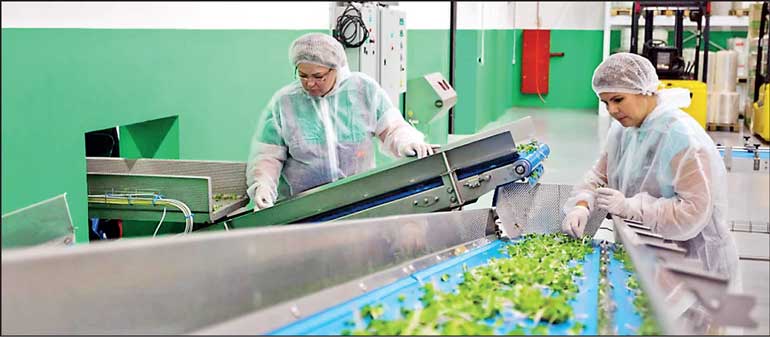
Processing is one of the most powerful engines of economic transformation. It allows countries to export higher-value products instead of raw commodities. It creates demand for packaging, cold storage, logistics, retail, and a wide range of supporting services. And it generates more productive jobs, particularly for young people and women.
Yet much of this potential remains untapped. Supply chains remain fragmented. Small and medium-sized agribusinesses struggle to access finance. Too often, policies continue to focus on increasing production rather than increasing value.
These issues were front and centre at a recent regional gathering in Ahmedabad organised under the South Asian Policy Leadership for Improved Nutrition and Growth (SAPLING) platform together with India’s Ministry of Food Processing Industries (MOFPI).
One message came through clearly: produce does not become a market product unless it is processed. Value is created through everything that happens next — processing, storage, transport, packaging, branding, and distribution. This is where losses are reduced, incomes rise, and jobs are created.
India’s own experience offers important lessons. Over the past decade, the country’s food processing sector has expanded significantly, helping connect farmers to markets and creating new business opportunities. Yet large opportunities remain, particularly in high-value and perishable products such as dairy, fruits, vegetables, and horticulture.
Three priorities stand out.
First, countries need to focus as much on the businesses that connect farms to consumers as they do on production itself. Farmers cannot prosper if processors, transport companies, cold-chain operators, and food manufacturers are missing from the equation. Strengthening this middle segment of the value chain is essential for reducing losses and increasing returns for farmers.
Second, focus on what the private sector needs to get involved. Public resources remain important, but they are not sufficient. Governments can help by creating the conditions for investment: reducing policy uncertainty, simplifying regulations, improving food safety systems, and addressing market distortions that discourage businesses from expanding. Public financing should increasingly be used to reduce risk and crowd in private capital rather than replace it.
Third, value addition needs to happen closer to where food is produced. Too much food is lost before it reaches a processor or market. Small-scale processing, storage, sorting, and preservation facilities located near production areas can reduce losses, raise incomes, and create jobs in rural communities. They can also help young people see agriculture not simply as farming, but as a source of business opportunities.
These priorities are at the heart of AgriConnect, the World Bank Group’s initiative to help transform smallholder farming into a stronger engine of jobs, income, and food security. The initiative focuses on strengthening the farming ecosystem through rural infrastructure, policy reforms, and private capital mobilization.
Technology can accelerate all three priorities. But digital tools are most effective when they solve practical business problems. In several countries, digital payment systems, logistics platforms, and market information services are already helping farmers, processors, and buyers transact more efficiently. The greatest gains often come not from digitising individual farms, but from making entire value chains work better.
South Asia does not face a shortage of food. It faces a shortage of value creation.
Unlocking greater value in South Asia’s food sector will require investment, innovation, and stronger links between farms and markets. But the prize is significant: a more competitive food sector, better jobs and incomes, and greater resilience in an increasingly uncertain world.
The region’s next agricultural success story will not be measured solely by how much food it produces. It will be measured by how much value it creates from every harvest.
(The author is the Global Director for Farming and Agribusiness, World Bank Group)




