Saturday Aug 01, 2026
Saturday Aug 01, 2026
Wednesday, 10 June 2026 06:15 - - {{hitsCtrl.values.hits}}
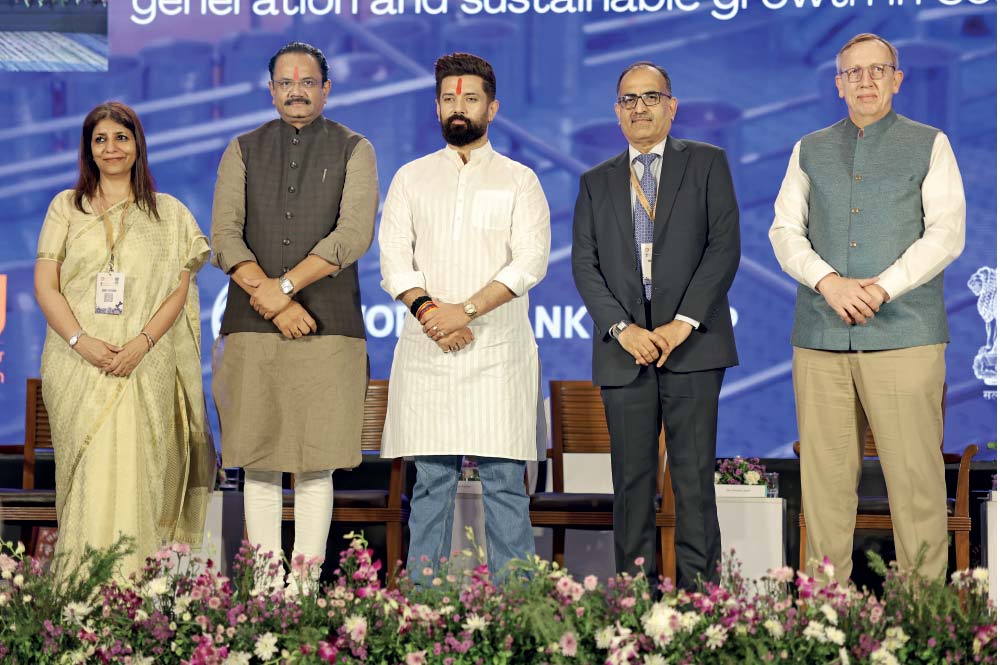
From left: Gates Foundation Country Director for India Archna Vyas, Government of Gujarat Agriculture Minister Jitubhai Vaghani, Food Processing Industries Union Minister Chirag Paswan, MoFPI Secretary Avinash Joshi, and World Bank Acting Country Director for India Paul Procee
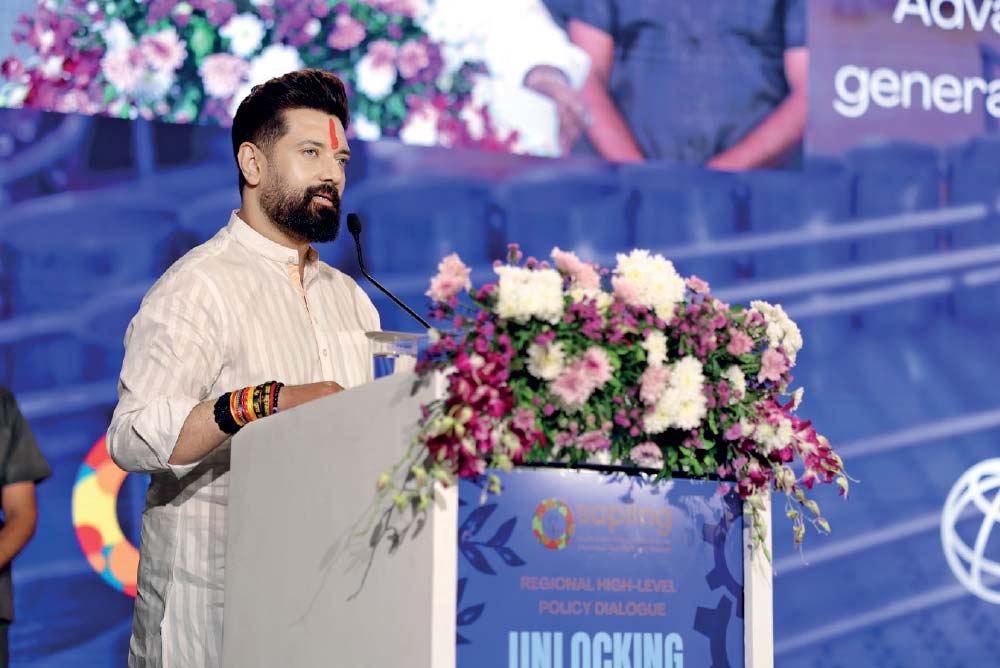
India’s Food Processing Industries Union Minister Chirag Paswan
The Ministry of Food Processing Industries (MoFPI), Government of India, in collaboration with the World Bank Group-led SAPLING initiative, yesterday inaugurated the Regional High-Level Policy Dialogue titled “Unlocking Value: Advancing Food Processing for Employment Generation and Sustainable Growth in South Asia” in Ahmedabad, Gujarat.
The two-day regional dialogue brings together around 200 participants, including policymakers, industry leaders, development partners, innovators, researchers, startups, and representatives from South Asian countries, to deliberate on strengthening food processing ecosystems and building resilient, inclusive, and sustainable food systems in the region.
Union Minister for the Ministry of Food Processing Industries Chirag Paswan, while addressing the inaugural session, highlighted India’s growing role as a global food processing hub and emphasised the importance of value addition, technology adoption, and regional collaboration in transforming South Asia’s food economy.
Paswan said that food processing is the bridge between agriculture and prosperity and has immense potential to generate employment, reduce post-harvest losses, improve farmer incomes, and strengthen food security. He noted that India’s policy initiatives and infrastructure development efforts are helping create globally competitive food value chains.
Government of Gujarat Agriculture Minister Jitubhai Vaghani appreciated the participation of various countries in this historic occasion of SAPLING 2026. Vaghani also emphasised the food processing sector as an engine of agricultural transformation and shared the commitment of the Government of Gujarat to fostering the agro-industrial sector as a driver of employment, value addition, and overall economic growth. To further this cause and bridge the gap between agriculture and industry, he advocated for a National Institute for Food Technology Entrepreneurship and Management campus in Gujarat.
The opening plenary featured participation from senior dignitaries, including World Bank Acting Country Director for India Paul Procee, Gates Foundation Country Director for India Archna Vyas, MoFPI Secretary Avinash Joshi.
The dialogue includes thematic sessions on:
Senior representatives from leading global and Indian organisations, including Nestlé, Bayer, Rabobank, Ajinomoto, ITC, SEWA, NABARD, and Food Industry Asia, are participating in the discussions.
An Innovation Fair has also been organised alongside the dialogue, showcasing breakthrough solutions in cold-chain logistics, digital traceability, sustainable packaging, smart processing technologies, and storage systems. The fair aims to strengthen partnerships among innovators, policymakers, and industry stakeholders.
On the occasion, the report titled “Assessment of the Level of Food Processing in India”, commissioned by the Ministry of Food Processing Industries, was released by the Ministers and dignitaries. The report presents a comprehensive assessment of food processing levels across major agricultural commodities and highlights the significant progress made in India’s food processing sector, with overall processing levels increasing from around 10% in 2016 to nearly 17% in 2023. The study also identifies substantial opportunities for value addition in perishable commodities such as fruits, vegetables, and dairy, and provides strategic policy recommendations to strengthen infrastructure, reduce post-harvest losses, enhance farmer incomes, and boost India’s global competitiveness in the food economy.
The SAPLING Regional High-Level Policy Dialogue is aligned with the World Bank Group’s AgriConnect initiative and SAPLING platform, which seek to accelerate resilient and nutrition-focused food systems across South Asia through policy reform, investment mobilisation, and technology-driven solutions.
The dialogue is expected to foster cross-country learning, strengthen regional cooperation, encourage private investment, support MSMEs, and identify practical pathways for food processing-led growth and employment generation in South Asia.
Around 16 persons from Sri Lanka are attending, including Secretary to the Prime Minister Pradeep Saputhanthri, Assistant Secretary Mihiri Tennakoon, and Trade, Commerce and Food Security Ministry Secretary K.A. Vimalenthirarajah, as well as representatives from private sector firms Dilmah, John Keells Holdings, Nestlé, and the Daily FT. Sri Lanka hosted the policy dialogue last year in Colombo.



