Tuesday Nov 03, 2026
Tuesday Nov 03, 2026
Tuesday, 3 November 2026 03:48 - - {{hitsCtrl.values.hits}}
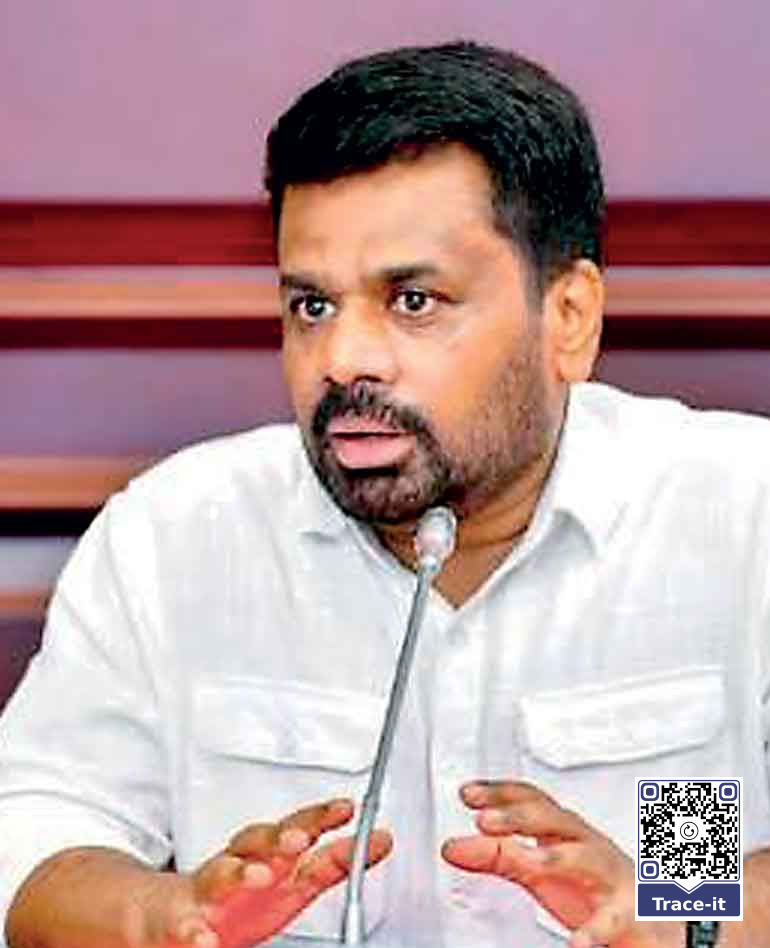
President and Finance Minister Anura Kumara Dissanayake and his Government’s real test was never stabilisation
 In September 2024, Sri Lanka handed the National People’s Power the cleanest mandate in its history. Two years on, the question is no longer whether the Government means well. It is whether it can deliver.
First, remember what was handed over. The NPP did not inherit a collapse; it inherited a recovery. In 2022, the economy had shrunk 7.3% and the country had defaulted on its foreign debt. By September 2024, under the IMF programme agreed in March 2023, growth was back to 5% in the first half of the year. Inflation stood at −0.5%, reserves had rebuilt to about $ 6 billion, and interest rates had been cut by 7.5 percentage points. Two days before the election, the outgoing Government reached an agreement in principle with international bondholders. The hardest part of the rescue was done. The test for the new Government was never stabilisation. It was what came next.
The new Government has built on that inheritance, and the record deserves credit. Growth held at 5% in 2025. Per capita income reached an all-time high of $ 5,003. Inflation stayed below zero for most of 2025. The stock market doubled from about 11,300 points at the election to 22,624 by December 2025. Tax revenue rose from 12.3% to 15.4% of GDP in a single year, and the primary surplus hit a record 5.4% of GDP. Government debt fell from 98.4% to 94.9% of GDP. These are real achievements, and any honest scorecard begins with them.
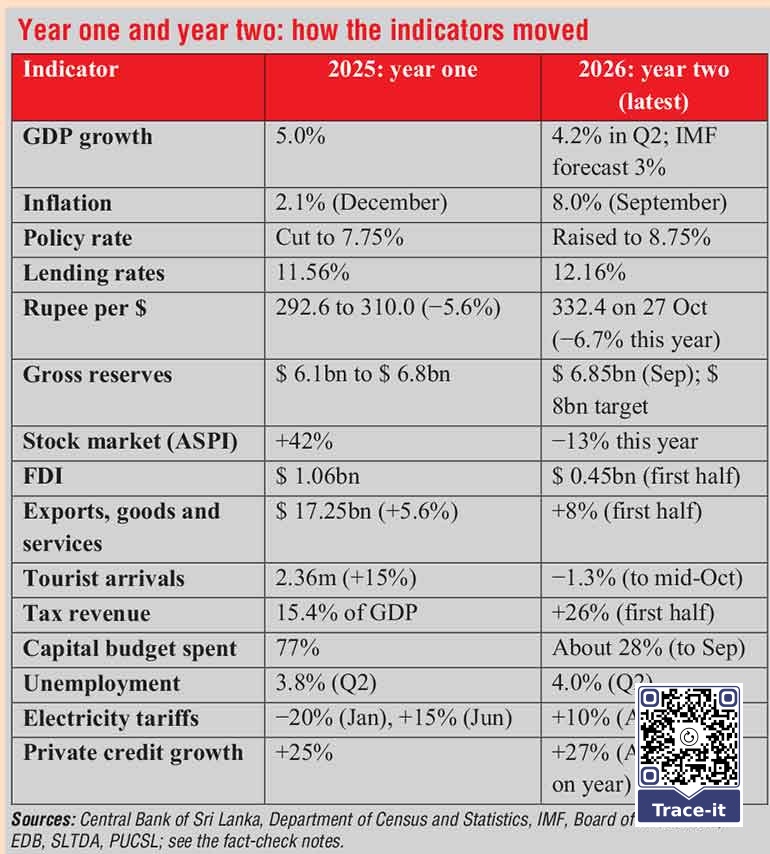
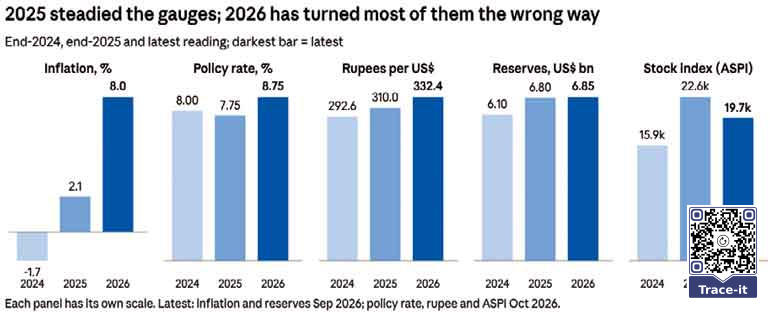
Year one was a good year for stability: low inflation, falling rates, record revenue and a booming market. Year two has reversed most of those gains, and the oil shock explains only part of it.
But look closer at how that surplus was made.
A Government that collects but does not build
A budget surplus is earned in two ways: by raising more or by spending less. This Government has done both, and the second is the problem.
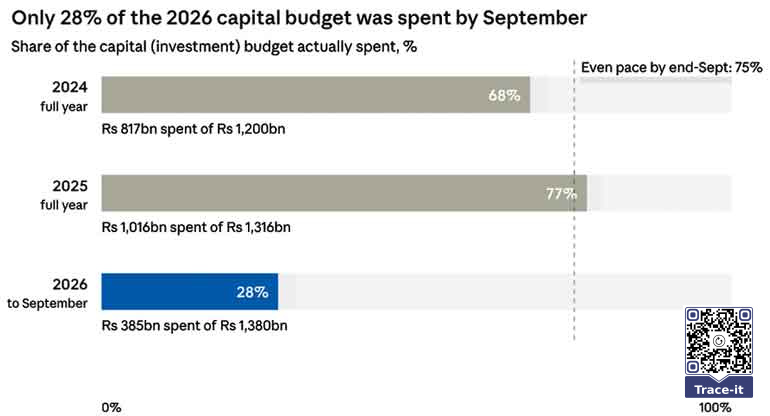
In 2026, Parliament approved Rs. 1,380 billion for capital investment: the roads, hospitals, schools and water schemes that make an economy grow. By the end of September, about Rs. 385 billion had been spent. That is roughly 28% of the year’s investment budget, with three months left. The Finance Ministry says 70% of spending usually happens in November. If so, that is not a plan; it is a year-end rush in which quality is the first casualty.
The pattern runs through the line ministries. A Right to Information disclosure from July 2025 showed that only 19% of the Health Ministry’s Rs. 18 billion medicine allocation had been spent at mid-year. For new hospital buildings, the figure was 10%. Twenty-five health construction projects, some begun in 2014, still need Rs. 76 billion to finish.
Meanwhile, the money keeps coming in. In the first half of 2026, tax revenue rose 26%. The Government ran an overall budget surplus of Rs. 9.5 billion, against a deficit of Rs. 406 billion a year earlier. A country still rebuilding from Cyclone Ditwah, with hospitals unfinished and roads washed away, posted a surplus because it could not spend what Parliament had approved.
Taxation is not a growth strategy
Sri Lanka’s entire GDP, $ 108.8 billion in 2025, is less than two months of Walmart’s global sales. An economy this small cannot tax its way to prosperity. Growth must come from investment, exports and productivity.
The signals there are mixed at best. Foreign direct investment reached $ 1.06 billion in 2025, a genuine improvement. But in the first half of 2026 it slowed to about $ 450 million, against a full-year target of $ 1.5 billion. Exports did better: $ 17.25 billion of goods and services in 2025, and up 8% in the first half of 2026. Tourism tells a harder story. Arrivals hit a record 2.36 million in 2025, but earnings rose only 1.6%, so each visitor spent about 12% less. In 2026, arrivals are slightly down on last year.
A global shock, and who was ready for it
In fairness, the energy shock of 2026 was not made in Colombo. When the Strait of Hormuz closed, Brent crude peaked at $ 118 a barrel at the end of March, and every importing country paid more. In Europe the anger spilled onto the streets. Ireland saw fuel blockades in April. Since September, France has faced port blockades by fishermen and a revived Yellow Vest movement, with diesel above € 2.37 a litre.
North-East Asia stayed calm, and not by luck. Japan held about 254 days of oil reserves and released 80 million barrels in March. South Korea held about 208 days and capped pump prices for the first time in almost 30 years. China held about 120 days and Taiwan more than 100. They built their buffers in good years, for exactly this kind of bad one.
Sri Lanka had about six weeks of fuel. Within days, motorists were rationed to 15 litres a week, and from 16 March State offices, schools and universities moved to a four-day week. Sri Lanka has never built a strategic reserve, and that failure belongs to every Government, not this one alone. But it marks the difference between managing a crisis and preparing for one.
Preparing means scenario planning. Every year, a Government should ask what happens to fuel supply, the rupee and the Budget if oil reaches $ 100 or $ 130, or if the Gulf closes, and have the reserves, supply contracts and contingency funds ready before it does. Singapore has run a Government scenario-planning unit since 1991. Sri Lanka still plans for the year it hopes for, not the year it may get.
Interest rates and the rupee: The cushion thins
The stabilisation of 2025 has not survived its first serious test. The war in the Middle East sent fuel prices up 40%. Inflation rose from 2.2% in March to 8% by August. In May, the Central Bank raised its policy rate by a full percentage point to 8.75%. Treasury bill yields reached their highest level in 87 weeks. The rupee, at Rs. 310 to the dollar at the end of 2025, now trades around Rs. 332. The stock market has given back about 13% this year.
For borrowers, the turn has been sharp. Lending rates rose from 11.56% to 12.16%, and longer-dated Government Bonds now yield 12 to 12.5%. For a household with a pawning loan, or a small firm on an overdraft, that is the cost of living by another name. The rupee lost 7.2% in the first five months of the year and briefly touched Rs. 348 in the interbank market in May, before the Central Bank stepped in. A weaker rupee raises the price of every litre of fuel, every bag of fertiliser and every box of medicine the country imports.
Some of this is imported, and no Sri Lankan Government controls the price of oil. But a shock tests the buffers a Government has built. Reserves stand at $ 6.85 billion, barely above the $ 6.8 billion of December 2025, and short of the $ 8 billion promised to the IMF for year-end.
To its credit, the Central Bank has not printed money to fund the Government. Monetary discipline has held. Fiscal execution has not.
Slower growth, fewer jobs for the young
In June, the IMF cut its 2026 growth forecast for Sri Lanka to 3%, down from 4% before the Middle East war. The Government’s own target had been 5 to 6%.
Slower growth lands hardest on the young. An IMF comparison published in September found that 43% of Sri Lanka’s young people with post-secondary education are unemployed. That is the highest of 12 Asia-Pacific economies. National figures point the same way. Unemployment rose to 4% in the second quarter of 2026, and among 25- to 29-year-olds it jumped from 9.3% to 12.1% in a year. Net, the economy added only about 74,000 jobs over the year, while agriculture shed 174,000.
Hardship runs deeper than the headline poverty rate suggests. The World Bank puts monetary poverty at 16.9% in 2025. Yet in March, the Government’s own Rural Development Minister Upali Pannilage, said about one in four Sri Lankans lives in poverty. A 2025 survey by the International Food Policy Research Institute found that one in three households was moderately or severely food insecure, five times the 2019 level.
Families are borrowing to get by. Pawning advances rose from Rs. 660 billion in December 2024 to Rs. 1,012 billion by March 2026, up 53% in fifteen months. Credit card balances rose 17% over the same period, to Rs. 197 billion. Higher gold prices explain part of the pawning surge, but not why so many households are putting their jewellery on the counter. With State investment stalled and the 2027 capital budget cut, the jobs that would lift these families out are not being created.
Households: Spending on borrowed money, saving less
On the surface, households are spending again. Private consumption grew 9.1% in 2025 and 7.1% in real terms in the first quarter of 2026. But incomes have not caught up. At the end of 2025, real wages in the public sector were still 16.1% below their 2020 level, and in the informal private sector 11.8% below. The gap is being filled with credit. Private sector lending was growing 27% a year by April 2026, on top of the rise in pawning and card debt. Retailers now report shoppers buying only essentials, with inflation above 7%.
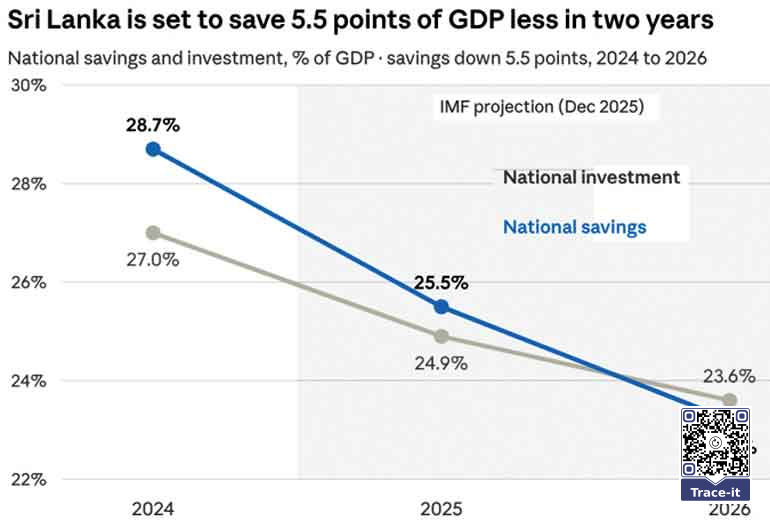
An economy is sustained by what its people save and invest, not by what they borrow to consume. Here the trend runs the wrong way. In its December 2025 review, the IMF projected national savings falling from 28.7% of GDP in 2024 to 23.2% in 2026, and national investment from 27.0% to 23.6%. The State saves by not spending its investment budget, while households borrow to stand still. That is not a recipe for growth.
Health: Allocated, not delivered
The health service shows the gap between allocation and delivery most painfully. The 2026 Budget gave Health and Mass Media Rs. 555 billion, its largest allocation yet. Yet medicine and equipment funds sat largely unspent at mid-year, and 25 hospital projects remain unfinished. Meanwhile, the specialists are leaving. The service needs 3,181 specialists and has 2,042, a gap of more than 1,100, and about 25 emigrate each year.
Agriculture: Going backwards
Agriculture shrank 2.3% in the second quarter of 2026, after growing 2.5% a year earlier. Rice production fell 15.1%, marine fishing 10.1% and tea 1.9%. In April, the Government had to allow emergency imports of Samba and Keeri Samba after the Maha harvest fell short. Farm employment fell by 174,000 in a year. Cyclone Ditwah destroyed an estimated $ 814 million of agricultural assets, and a bag of urea now costs Rs. 9,900 to Rs. 10,200. A country this fertile should not be importing its staple.
Energy: A promise reversed
Before the election, Anura Kumara Dissanayake promised to cut electricity bills by a third. Tariffs fell 20% in January 2025, then rose 15% in June 2025, well before any war. The Ceylon Electricity Board ended 2025 with a Rs. 38.7 billion loss. In February 2026, still before the Gulf erupted, it asked for a 13.56% increase, and from April tariffs rose by 8% to 14%. The war came on top, opening a Rs. 38 billion hole for mid-2026, which the regulator kept off 95% of consumers with a Rs. 15 billion subsidy. Low-quality coal, a procurement failure, cut output at Norochcholai. Most of the electricity problem was made at home. A third off was the promise, and voters remember it.
Losing money it already had
Good governance was the NPP’s founding promise. Yet between October 2025 and January 2026, $ 2.5 million meant for a debt repayment to Export Finance Australia was diverted to cybercriminals in ten separate transactions. It was Australia, not the Treasury, that noticed the money had not arrived. The parliamentary Committee on Public Finance found that payments continued after red flags were raised.
It was not an isolated failure. Around $ 625,000 meant for the United States Postal Service went astray through a phishing scheme, most of it in 2025. Two departments, the same weakness: payment systems that no one was watching.
Safety, and a disaster still waiting
Public safety has not improved. Police recorded 114 shootings and 60 deaths in 2025, more incidents than the 103 of 2024. By mid-September 2026, underworld-linked shootings had killed 17 people, including two children in a grenade attack in Dehiwala. The police service is short of about 40,000 officers.
Cyclone Ditwah, in November 2025, killed more than 600 people. The World Bank put direct damage at $ 4.1 billion, about 4% of GDP. Parliament approved over Rs. 500 billion for recovery projects. Nearly a year on, the opposition is still asking for a report on how much has been spent. The IMF’s latest mission called for removing the bottlenecks in capital spending to speed up reconstruction.
Power at the centre
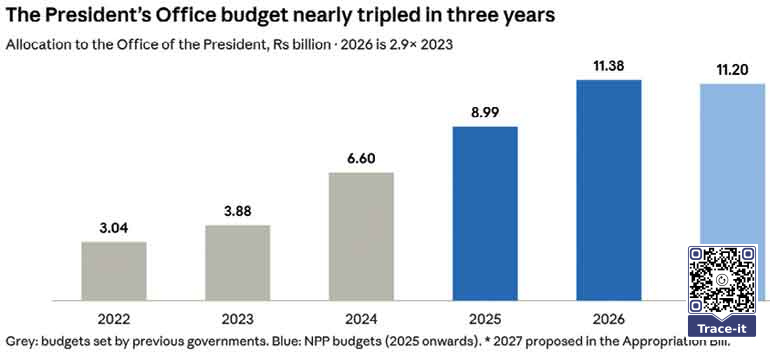
The 2027 Appropriation Bill directs about 27% of spending to ministries held by the President, chiefly Finance and Defence. Previous presidents also held these portfolios, so the share alone is not the scandal. The trend in the President’s own office is harder to defend. Its allocation was Rs. 3.88 billion in 2023. It rose to Rs. 11.38 billion in 2026, the highest ever, and Rs. 11.2 billion is proposed for 2027. Meanwhile, the 2027 capital budget in the Appropriation Bill is 5.4% lower than this year’s, despite promises of Rs. 2 trillion in investment.
What has worked
The digital agenda deserves recognition. GovPay, the platform for paying Government charges online, has processed more than Rs. 5 billion across over 300 State institutions. Service charges on Government e-payments were scrapped in January 2026. The first digital identity cards are due by the end of this year. These are the foundations of a modern State, and they were built quietly and well.
The verdict: Country before politics
The NPP inherited a country on the road to recovery and kept it there through 2025. That counts. But a surplus built on unspent hospital and road budgets is not prudence. It is postponed development. When the first real shock arrived in 2026, the cushion proved thin.
If 2027 is to look better, the President must run the Government by delivery. Every key Ministry, from health and education to agriculture, energy and highways, should have three or four published targets for the year. Spending and progress against them should be reported in public, every month. Malaysia did this through PEMANDU, its delivery unit, from 2009; Britain did it through the Prime Minister’s Delivery Unit. Ministers who deliver should be backed. Those who do not should be moved, whatever their standing in the party.
That means spending the capital budget on time and in full. It means fixing the payment controls that let millions walk out of the Treasury, giving the families rebuilding after Ditwah an account of where the money went, and putting jobs for the young at the centre of the 2027 Budget.
The NPP promised a new way of governing. Collecting taxes was never the hard part. Building a country is. In 2027, it must be country before party.
(The author is a former COO of the Public-Private Partnership unit of the Finance Minister, an ex-banker and educationist)
What Budget 2027 should commit to
The 2027 Budget, due in November, is the moment to set the targets. Each one below can be measured, and each should be reported in public every month.